Competition just might be the shot in the arm your organization needs
1 July 2026 Leave a comment
Competition is almost a dirty word in the not-for-profit sector. After all, mission-defined, not-for-profits thrive under a governing paradigm of collaboration. Collaboration is the lever they use to expand the resources and energy available to advance mission and associations are defined by mission, not market dominance. Business success and revenue are necessary means to that end, not the mission itself.
But still, correctly perceived, competition might just be the shot in the arm your association needs.
The proper response to competition requires a different mindset
Competition does not need to be predatory or adversarial. Your goal is not necessarily to beat the competition or cut into the competition’s market share. Your goal is to advance your own mission effectiveness and organizational sustainability. It can often be approached through a classic blue ocean strategy, rather than the more typical red ocean variety.
The key is being aware enough to notice who might be doing something different or better than your own organization, maybe even endangering your association’s position, and learning from it.
- Are there tactics and strategies you can learn from them and apply to your own association? These lessons can be used in a manner that the competitor may never even be aware of or concerned by. And they might offer insights into the unique market position your association occupies and how you can be more effective in offering entirely different products, services, and value propositions.
- Is there something your association is uniquely situated and has the capacity to do better for a constituency relevant to your organization? Maybe there is some element of their market that is too small for the competitor to give full attention to, leaving you more capable of customizing, targeting, and serving better.
- Or is the competitor too strongly entrenched, established, and resourced for you to take on directly? You are better off accepting that reality, adjusting your own strategy, and avoid wasting time, attention, and resources chasing a market you have little chance of success with or displacing a Goliath strong enough to withstand David’s slingshot.
A non-association case history
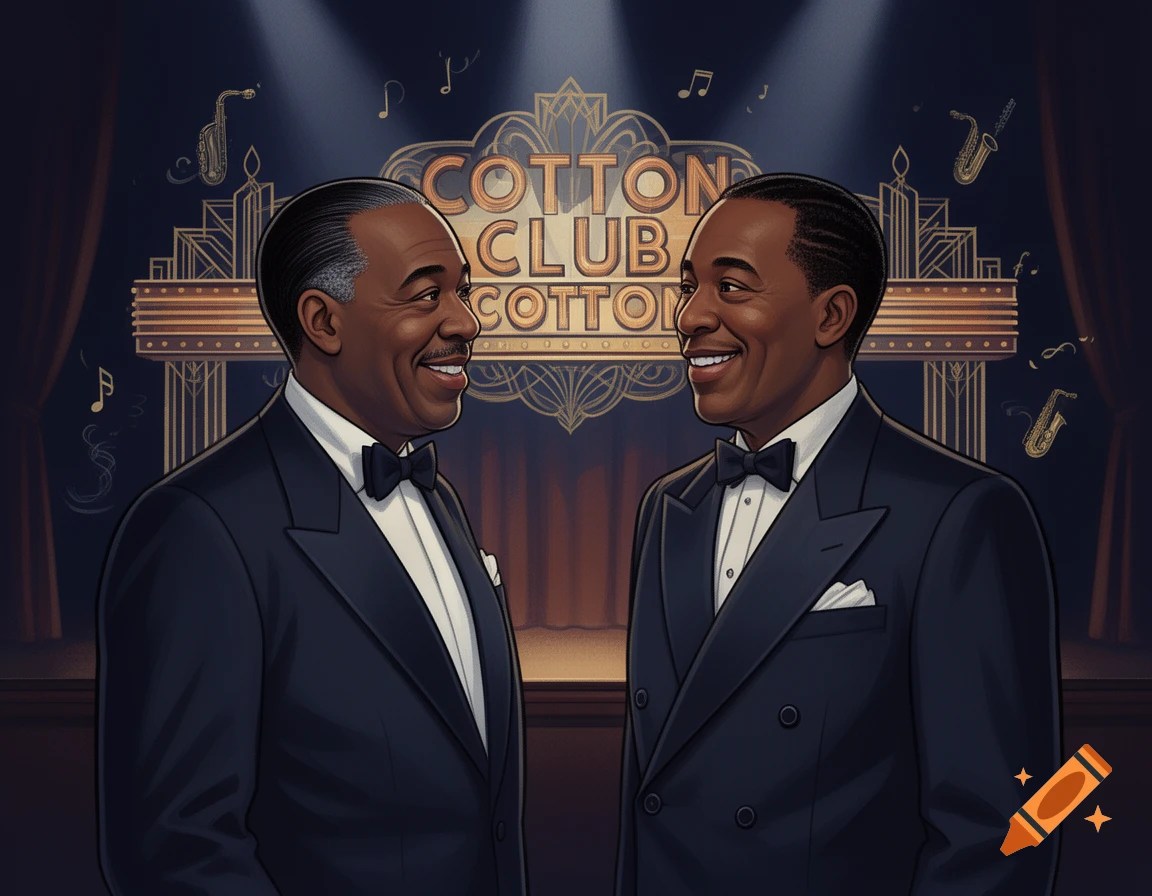 By the early 1930s, Duke Ellington’s band reigned supreme at Harlem’s Cotton Club while it was helping define the new music that would come to characterize the swing era. But Ellington’s orchestra had its shortcomings in terms of precision, discipline, and consistency in performance. As the groundbreaker who offered something wholly new, it didn’t matter. It was arguably sloppy, but there was nothing to compare it to. It wasn’t until the Jimmie Lunceford orchestra arrived at the Cotton Club in the mid 1930s, with his close attention to the quality of musical arrangements and rehearsing, that the value of more consistency and precision in preparing and performing swing became apparent. (And make no mistake: the fact that Lunceford was the more craft attentive band leader did not mean his band didn’t swing. It did. In new and exciting ways.)
Ellington learned from what he saw and heard. He didn’t abandon his own artistic vision, or even worse, try to imitate the Lunceford style. He remained authentically and uniquely Ellington. And arguably precisely the things that Lunceford introduced (careful arrangements, disciplined rehearsals and performance) became hallmarks and strengths of the artist Ellington would eventually become and the artist we remember today: the master arranger and composer who crafted brilliant musical books and built bands capable of executing his vision in a manner unlike any other artist.
In a strictly commercial sense Ellington and Lunceford were competitors. They were competing for the mindshare (or perhaps more accurately, ear share) of the musical public.
But I doubt taking audiences away, one from the other, was the primary driving force for either musician.
Rather, the emergence of Lunceford (and others) injected awareness of new, artistic possibilities and a very, very powerful introduction of energy to a market leader in danger of being rendered obsolete if it remained complacent.
If you must frame this as Ellington versus Lunceford, then in a narrow sense Ellington won the battle. I would wager that everybody (regardless of their level of awareness or interest in jazz) knows the name of Ellington. And while Lunceford is by no means a forgotten artist, even some avid and informed jazz lovers I know would probably recognize the name but confess no familiarity with his body of work (captured for history in the form of recordings).
Ellington had more lasting success. He achieved more fame and a more substantial place in music history. But that’s not the point. Ironically, a part of that very success can at least in part be attributed to something Ellington saw in Lunceford: precision in preparation and discipline in performing big band jazz.
Ellington didn’t beat Lunceford. He went to school on him and used what he learned to achieve a place in history uniquely his own.
An important acknowledgment. The history of jazz and the nature of influences is much more complex than this brief summary suggests. But I think the example proves the point, even if it doesn’t tell the whole story.
Be aware but thoughtful
So you absolutely do need to be on the lookout for emerging “competition” in your association’s domain. But when you see it, your first response shouldn’t be to immediately draw daggers and lean into head-to-head competition.
- Take a pause first to see what the competition is doing well that might help you be better.
- Don’t abandon your unique role and try to morph into a mere replication of a competitor you can never displace.
- And even if you are the current dominant player, don’t dismiss the smaller competitor who can never take you down, but might have something unique that can be applied to your own authentic mission.
Disclaimer
The ideas contained here are my own. I do not speak for any organization or company.
AI may have been used to generate the image accompanying this post. I do NOT use AI to generate or edit drafts.