Competition just might be the shot in the arm your organization needs

Competition is almost a dirty word in the not-for-profit sector. After all, mission-defined, not-for-profits thrive under a governing paradigm of collaboration. Collaboration is the lever they use to expand the resources and energy available to advance mission and associations are defined by mission, not market dominance. Business success and revenue are necessary means to that end, not the mission itself. 

But still, correctly perceived, competition might just be the shot in the arm your association needs.

The proper response to competition requires a different mindset

Competition does not need to be predatory or adversarial. Your goal is not necessarily to beat the competition or cut into the competition’s market share. Your goal is to advance your own mission effectiveness and organizational sustainability. It can often be approached through a classic blue ocean strategy, rather than  the more typical red ocean variety.

The key is being aware enough to notice who might be doing something different or better than your own organization, maybe even endangering your association’s position, and learning from it.

  • Are there tactics and strategies you can learn from them and apply to your own association? These lessons can be used in a manner that the competitor may never even be aware of or concerned by. And they might offer insights into the unique market position your association occupies and how you can be more effective in offering entirely different products, services, and value propositions.
  • Is there something your association is uniquely situated and has the capacity to do better for a constituency relevant to your organization? Maybe there is some element of their market that is too small for the competitor to give full attention to, leaving you more capable of customizing, targeting, and serving better.
  • Or is the competitor too strongly entrenched, established, and resourced for you to take on directly? You are better off accepting that reality, adjusting your own strategy, and avoid wasting time, attention, and resources chasing a market you have little chance of success with or displacing a Goliath strong enough to withstand David’s slingshot. 

A non-association case history
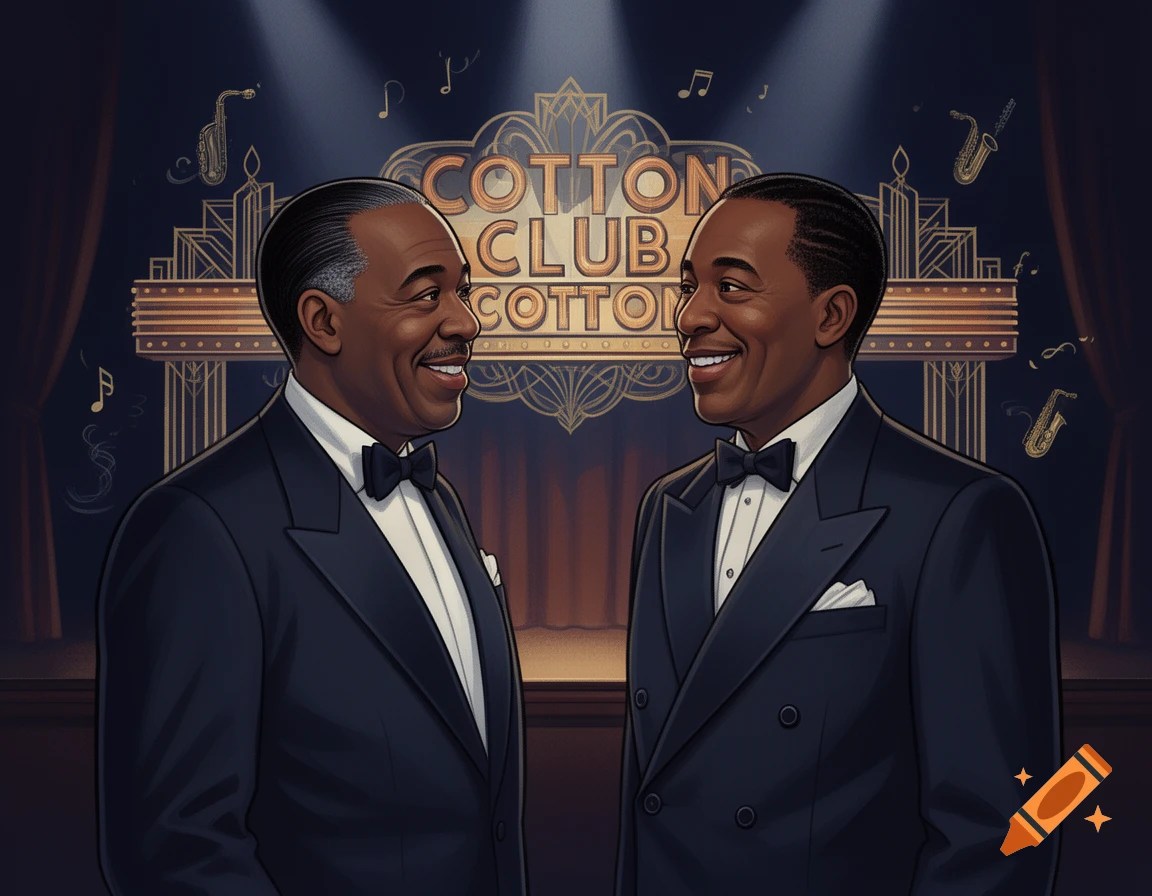
By the early 1930s, Duke Ellington’s band reigned supreme at Harlem’s Cotton Club while it was helping define the new music that would come to characterize the swing era. But Ellington’s orchestra had its shortcomings in terms of precision, discipline, and consistency in performance. As the groundbreaker who offered something wholly new, it didn’t matter. It was arguably sloppy, but there was nothing to compare it to. It wasn’t until the Jimmie Lunceford orchestra arrived at the Cotton Club in the mid 1930s, with his close attention to the quality of musical arrangements and rehearsing, that the value of more consistency and precision in preparing and performing swing became apparent. (And make no mistake: the fact that Lunceford was the more craft attentive band leader did not mean his band didn’t swing. It did. In new and exciting ways.)

Ellington learned from what he saw and heard. He didn’t abandon his own artistic vision, or even worse, try to imitate the Lunceford style. He remained authentically and uniquely Ellington. And arguably precisely the things that Lunceford introduced (careful arrangements, disciplined rehearsals and performance) became hallmarks and strengths of the artist Ellington would eventually become and the artist we remember today: the master arranger and composer who crafted brilliant musical books and built bands capable of executing his vision in a manner unlike any other artist.

In a strictly commercial sense Ellington and Lunceford were competitors. They were competing for the mindshare (or perhaps more accurately, ear share) of the musical public.

But I doubt taking audiences away, one from the other, was the primary driving force for either musician.  

Rather, the emergence of Lunceford (and others) injected awareness of new, artistic possibilities and a very, very powerful introduction of energy to a market leader in danger of being rendered obsolete if it remained complacent.

If you must frame this as Ellington versus Lunceford, then in a narrow sense Ellington won the battle. I would wager that everybody (regardless of their level of awareness or interest in jazz) knows the name of Ellington. And while Lunceford is by no means a forgotten artist, even some avid and informed jazz lovers I know would probably recognize the name but confess no familiarity with his body of work (captured for history in the form of recordings).

Ellington had more lasting success. He achieved more fame and a more substantial place in music history. But that’s not the point. Ironically, a part of that very success can at least in part be attributed to something Ellington saw in Lunceford: precision in preparation and discipline in performing big band jazz. 

Ellington didn’t beat Lunceford. He went to school on him and used what he learned to achieve a place in history uniquely his own. 

An important acknowledgment. The history of jazz and the nature of influences is much more complex than this brief summary suggests. But I think the example proves the point, even if it doesn’t tell the whole story.

Be aware but thoughtful

So you absolutely do need to be on the lookout for emerging “competition” in your association’s domain. But when you see it, your first response shouldn’t be to immediately draw daggers and lean into head-to-head competition. 

  • Take a pause first to see what the competition is doing well that might help you be better.
  • Don’t abandon your unique role and try to morph into a mere replication of a competitor you can never displace.
  • And even if you are the current dominant player, don’t dismiss the smaller competitor who can never take you down, but might have something unique that can be applied to your own authentic mission.

Disclaimer

The ideas contained here are my own. I do not speak for any organization or company.

AI may have been used to generate the image accompanying this post. I do NOT use AI to generate or edit drafts.

A plug for Beethoven and company in times of stress …

I was always someone who recognized the critical value of diligently providing for personal solitude as an element of leadership effectiveness. (There is a pretty good book on this subject if you are unconvinced: Lead Yourself First, by Raymond Kethledge and Michael Erwin).

The coronavirus pandemic would seem to have made solitude the new norm. But this enforced solitude is no guarantee of productive solitude.

Yes, we find ourselves in isolation, but the very technology that is the basis for sustaining some semblance of business continuity during this period of social distancing and stay-at-home orders (in my experience, at least) is actually increasing the noise and distraction. (How many hours did you spend on Zoom today?)

This 24/7 connectivity coupled with the natural yearning for human engagement is making it harder to do precisely what is demanded of us now as leaders in the face of such massive external disruption and existential personal and professional jeopardy. In crisis, our responsibility as leaders demands that we make space and step back to ensure that we are not merely reacting in the moment. Reflection is necessary to making difficult decisions wisely, with analytical clarity, creativity, emotional balance and moral courage.  

Exercise, meditation, prayer, and music are the frequent escape routes to such deep reflection.  

Many people who don’t normally listen to “classical” music may already be listening to it more in these stressful times. Its meditative qualities are obvious even if you know nothing about its nature, historical context, style or structure (as endlessly fascinating and absorbing as those things are to some people, myself included). 

If this is unfamiliar territory for you, a few words of advice to help you find your way.

First and most important: don’t buy into the big lie: that you need to study, learn and become an expert before you can enjoy or benefit from this music.  That is a fallacy promoted by cultural elitists to feed their need to feel superior. Music (all music) speaks directly to the soul and speaks in something other than words. Its power and content are accessible to anyone who is open to it.

True, the words used to describe the different forms and elements of classical music can be a little intimidating, like the unfamiliar language used to describe the offerings on a menu when you try a new style of restaurant for the first time.  But it need not frighten you. 

A symphony is just a single work for orchestra. It is made up of separate movements (often, but not always, four in number). Movements are just like chapters in a book.  

A concerto is really just a symphony with a featured solo instrument. Again, it is generally made up of multiple movements (often, but not always three in number), organized like chapters in a book.

A sonata is a single work for a specific instrument (without orchestral accompaniment) consisting of multiple movements. (The same term is also used to describe the internal structure of some musical forms, but you need not bother yourself with that.)

Nothing to be afraid of there. And nothing you really needed to know before tapping into the restorative potential of the music.

But I point it out only to make you aware that there is a reason the composer combined those separate “tracks” into a multi-part work. You can choose to read a single chapter in a book and find it edifying. Same with a single movement from a symphony, concerto or sonata. But realize that you are sampling just an excerpt of something larger.  The composer didn’t just throw random pieces of music together in random order and call it a symphony, any more than an author threw together random chapters in random order and called it a book. I’ll come back to this, but sometimes just an excerpt is like small plates in a restaurant – tasty, but you are missing the satisfaction of a planned, full menu, where carefully chosen appetizer is paired with salad, followed by a main course, and topped with dessert.  

Next, you are faced with the (very often Italian) words used as titles for individual movements within a larger work.  These are merely descriptions of the musical content of that “chapter.” Words like adagio, allegro, scherzo, etc. do have specific meanings related to the technical nature of the music. (Grossly oversimplifying: adagio means played slowly, allegro means played fast, scherzo means light and playful, and so on.) But again, you don’t need to know why its tagged that way to respond to the music itself. I only point it out because, it might be helpful in identifying more music from the vast classical catalog that you would like. (To use yet another food analogy, you don’t need to know that a specific seasoning or ingredient is what makes you like a particular dish so much. But knowing you like that ingredient could help you find new dishes you will probably also like.)

So here are my suggestion:

  • Look at the late 18th through the 19th century (generally labelled the classical and romantic periods). There are exceptions, of course, but the music of these periods is characterized by its accessibility. It has heavily influenced the music written for many movie soundtracks and if you loved Game of Thrones or Star Wars or Schindler’s List or The Godfather much of it will have a familiar feel.
  • Some people find earlier music of the 17th and early 18th centuries (the baroque period) more abstract, and some of it can be austere. But don’t hesitate to sample it. There is music of deep profundity to be found here too, as well as music of exquisite exuberance, if you need a pick me up.  (Again, the determining factor is what you respond to, not what some “expert” suggests you “need” to appreciate.) 
  • Go ahead and start with the big names (Beethoven, Mozart, Bach, etc.) and the popular hits so often packaged in those “100 Masterpiece” collections that used to be advertised on late night TV. There are reasons people who may have heard nothing else by Beethoven immediately recognize the opening of the fifth symphony. This is not a time for cultural snobbery – just because its popular doesn’t mean you lack musical refinement. It’s still great music.
  • Look for the adagios.  These aren’t the big, dramatic, heroic movements from longer works that you are most likely to have heard before. They are generally the gentlest, calmest and most soothing movement within multi-movement compositions.  Try, for example, the third movement of Beethoven’s ninth symphony (the “Choral” symphony) or the second movement of Beethoven’s fifth piano concerto (the “Emperor” concerto). Both are adagios.
  • If you find something that speaks to you, look for more by the same composer, or movements that are similarly labeled, or works in the same musical format. For example, if you find solo piano speaks to you more than orchestral works, stick with piano in your search. If vocal music sends you shrieking for the door, skip opera and stick with the orchestral stuff. If the adagio from one Mozart piano concerto appealed to you, most of his other 22 concertos also have an adagio movement you could check out.

These are useful signposts, not absolutes. Just because Mahler (who falls outside any of the historical periods of music cited above) wrote incredibly moving adagios doesn’t mean you’ll respond equally to anything else he wrote. Maybe Bach leaves you cold. That’s OK, too. Personally, I would feel impoverished without either of them. But that’s just me. You’re exploring what works for you, not seeking a degree in musical appreciation.

  • Finally, if you want to engage in the music as something more than a pleasant background soundtrack, once you have found your way into a larger, multi-movement work that speaks to you, continue on into the next chapter. That is, keep listening to the next track – the movement or section that follows your excerpt.  In the case of both the Beethoven adagios cited above, these serene movements lead naturally, organically and convincingly into the next movements, which are of considerable vigor and dramatic effect.  

That is instructive too, because we can’t just retreat and remain in solitude: having regained our equilibrium, these spiritual sabbaticals need to feed energy, focus and clarity into action, just as, in Beethoven, the dreamy adagio sets up the stormy and triumphant finale. 

[And a note begging forbearance from any reader knowledgeable about music. Every categorical statement above can be picked apart. Music is immensely vaster and more complex than these generalizations suggest. There are 20th century compositions as accessible as anything from the classical or romantic periods. There are obscure composers whose music is as accessible as anything Beethoven or Mozart ever wrote. There are scherzos that are anything but light and playful and adagios that are positively nightmarish. These are matters for connoisseurs to delight in; they need not create a barrier to those new to this music.]