Why change is hard and so often goes wrong

imagesA member shared this video with me recently, which demonstrates that knowledge does not equal understanding and that it is very difficult to change biases.

http://viewpure.com/MFzDaBzBlL0?ref=bkmk

Watch the whole 8 minutes if you can … there is more here than the initial “hook” of the video: how changing one thing makes even a simple, customary task more difficult.

The video triggered (unpleasant) memories for me of every strategic planning initiative I have ever been involved in, as a staff leader, a volunteer or a consultant.  It makes understandable how quickly and easily a new paradigm, once mastered, can be abandoned … particularly by those who have lived longest in the old paradigm and who are generally the ones in positions with the most organizational influence.

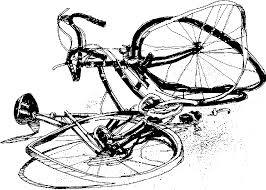
It is very relevant to where my own organization, is right now.  We did things right: engaging members (not just active volunteers) in collecting data on their needs, expectations and aspirations.  We listened with open minds, willfully rejected pre-conceptions, and applied what we learned in an open-minded fashion. We took the time to build broad consensus on future direction and focus long before we tried to reduce it all to words in a strategic plan. We have the knowledge, and understanding, and even buy-in to that new vision and its goals, clearly articulated in a new strategic plan, and being applied with discipline to our actions, programs, and branding messages. But agreement, will, and intention are not enough to keep the new bicycle on course.  And this little video demonstrates why, so often, the final result of even big change often ends up looking a whole lot like what it was supposed to replace.

So take this as a cautionary tale.

Context, continuity, and generations

long view 2A lot of self-help books and personal development coaches advise taking a break from your area of professional focus every now and then to read things entirely outside your field.  In today’s world of mass media, information overload, and 24-hour-a-day, day jobs, that is increasingly hard to do.  But I have found this to be a valuable piece of advice throughout my career, as was brought home by two separate instances in the past week, neither of which had any connection to the field I represent at my association.

First it was my privilege to be included in a small dinner, hosted by Mark French of Leading Authorities, to hear John Pistole, the former deputy director of the FBI and, until this January, head of the TSA.  He offered up a piece of advice from his long career in intelligence and law enforcement that struck me as equally applicable to associations and other mission-driven organizations:  Text without context is merely pretext.  A piece of data, no matter how intrinsically significant, can be manipulated or inferred to support any conclusion you want it to, until you place it meaningful context.

Twitter feeds remind me of this every day: highly distilled nuggets of what looks like wisdom that only rise above being empty, if clever slogans if I happen to be in-the-know with the community, situation or events that provide a context for understanding it.

Later in the same week, I was reading a literary and theological journal devoted to the thought of writer/philosopher G. K. Chesterton.  One excellent article1 caught my particular attention. Its author, David Fagerberg, a university professor, observed that it was his impression that generational variations (in attitudes, preferences, styles of behavior and communication) occur much faster than do the changes in sociological cohorts (millennials, baby boomers, et. al.), which are measured in decades.  Generational changes manifest themselves closer to every four years than every 40.

He went on to observe that with each new generation, our communities experience a form of amnesia, similar to the short-term memory loss suffered by the protagonist in the film Momento2. We like to talk about changes our organizations are making in society, but every day, a new generation is becoming a part of it, without any memory of the history behind any group, cause, fashion or fad they encounter.

To them, everything is new.  But, in one sense, there is nothing new under the sun. As Fargerberg pointed out and Chesterton wrote nearly a 100 years ago, today’s revolution, is really just a reaction or counter revolution to yesterday’s new perspective, which was in turn a reaction to the day before. Wait long enough, and you see rebellions repeating themselves and matters of fundamental truth, justice, ethics, whatever you want to call it, ultimately prevailing (albeit, often clothed in newer, contemporary costume).

That is why storytelling — creating a context — is so important for any mission-driven enterprise.

Core mission, our purpose and reason for being, if it is authentic, remains unchanged and unchanging. Reminding people of history, of what got us here, is so important to triggering a recognition of why what we are doing today is important and relevant. But understanding how to communicate that core mission in terms that are relevant to today’s frames of reference requires dexterity. Today’s frame of reference will be different tomorrow.

Taking the long view, fads come and fads go.  “[T]he great danger of the moment,” Chesterton wrote, “is that young men will become content with these revolts against revolt, these reactions against reaction; so that we have nothing but an everlasting seesaw of the Old Young and the New Young; the last always content with its fleeting triumph over the last but one. And the only way to avoid that result is to teach men to stretch their minds and inhabit a larger period of time.”  Over time, if the mission remains valid, history will show how it “has one by one outdistanced all the runners who prided themselves on their youth and advanced positions … By that time, it will be more apparent than ever that these jerks of novelty do not create either progress or an equilibrium3.”

That is not an invitation to complacency.  Waiting for each new generation to gain the perspective of the long view is fatal. We might eventually be recognized as having been right, but only posthumously.

Another all too understandable trap is equally fatal.  When enlivening the old mission with new energy seems impossible, it is tempting to focus on form over substance, trying to impose past structures, hierarchies, and processes, in an authoritarian, fundamentalist fashion, as if going through the motions all over again will recreate the sense of purpose that originally sparked them.

Becoming prisoners of our history is another danger: the feeling that we can not make progress today without first going back in time (as if that were possible) to correct the problems and mistakes we made then.

So I hope I am not coming across as a worshiper of a dead past or a cheerleader for the status quo.  Far from it.  Change or die?  True enough.

But as Chesterton reminded me, not all change constitutes progress.  Equilibrium is necessary for progress: the clarity and stability to not become distracted from the core, unchanging thing and seeing how best to serve it in the world today.  Otherwise we will constantly be dashing off in new directions and losing the line.

The challenge lies in simultaneously: 

  • Acting in the present, in a manner that is immediate and responsive to today’s passing perspectives; and
  • Staying connected to the roots and in continuity with the history that got us here, inviting those for whom everything is new to see their place in it.

In short, providing context.


1 “On Generations,” David W. Fagerberg, Gilbert Magazine, Volume 18, No. 2-3, November-December 2014.

2 And how many of us, even with birth dates separated by only a few years, actually remember Momento?

3 The Well and the Shallows, G. K. Chesterton, 1935.

The Future of Membership?

future of membershipOn November 6th, I was invited to present a TED-style talk on the “Future of Membership” at the first Association Chief Executives (ACE) Symposium.  My thesis:  volunteerism not membership is what makes our organizations unique; membership is a means to an end; the metrics we use to judge membership success are all wrong; and the bottom line: get clarity around your mission (your purpose) first, then worry about what form of membership (if any) serves that purpose best.

Read the presentation here.

Radical orthodoxy

It is something of a commonplace to refer to associations as a kind of family or even to think of our mission-driven efforts as in some ways similar to a religion: an effort to organize like-minded individuals who share a common cause … a cause that is integral to both who they are as individuals (in our case, generally, members of the same industry or profession) and as part of something larger than individual self-interest.  We want our members to be passionately engaged, not mere consumers of products and services.  We want to make a difference and change the world in some way, hopefully for the better.  We even sometimes talk about being “evangelists” for our profession, industry or cause.

That thought came home hard with me while recently reading something about my own church.  Which church is irrelevant and naming it would only serve to derail the discussion in unrelated directions.  It isn’t about what one church believes or how you feel about it.  It isn’t meant to suggest that any of our organizations are as profoundly important as any church is.  Just go along with me for the moment, accepting that a church — any church — is a non-profit, voluntary organization with a mission.  What this commentator said about this church struck me as relevant for associations, too.  Paraphrasing to the point of plagiarism, that commentary ran along the following lines:

Association membership or engagement maintained merely out of cultural habit or legal/governmental establishment “has no future because it does not merit a future.”  A mission-driven organization that does not get out into the world and act upon what it believes sooner or later gets sick “in the hothouse atmosphere of its own self-absorption.”

When any organization gets too concerned about itself — its structure, hierarchy, governance, internal politics, culture — rather than its mission, the purpose it exists to serve, it “falls victim to a kind of narcissism.”  That narcissism leads to an irrelevant and self-referential focus on its own sophistication in form and operation.  This is where organizations get sidetracked by hugely contentious internal matters that, if we allow them to (and how often we do allow them to), become all-consuming efforts around matters that don’t actually matter.

We rationalize it, of course, and make it sound reasonable.  We tell ourselves that it would be foolish to take external actions until we get our own houses in order … until we get the membership model exactly right.  Or governance perfected.  Or whatever.

But where does that leave us vis-à-vis our mission?  Bold action, it is true, means that you risk something.  “Just as things can happen to someone who leaves the safety of home: accidents can happen.”  But isn’t “risking an injured organization far preferable to a sick organization, palsied by self-absorption?”

Such radicalism is “going to take some getting used to. Expect serious disorientation in those ideological redoubts where old battles over now-superceded [self-referential institutional constructs] … remain all-consuming.”

“Some may find it hard to reconcile … radicalism with orthodoxy. But that’s precisely what orthodoxy is: the adventure of radical conversion ordered to mission.”

I realize that these ramblings run the risk of fueling the fires of another pitfall we face:  an overinflated sense of our own importance.  After all, we aren’t responsible for men’s souls or eternity.  Hubris is as catastrophic as self-absorbed complacency.  Maybe even more so.  Associations are important … but we are not that important.

Still … we are organizations defined by mission.  We should be organizations driven by mission.  Keeping our houses in order is important, but only in so far as being better organized and structured, operationally efficient, and philosophically consistent makes us better at achieving our mission.

Start with the end in mind, build capacity, achieve results, as Stephen Covey put it.

But never forget the core purpose, the mission, along the way.  That never changes, and shouldn’t as long as the mission itself remains relevant.  Being radical and orthodox means taking chances with everything else, risking everything else, in a ceaseless effort to be true to the reason the organization was created in the first place: its mission.

Free? Hold on a Minute.

A few years ago I moderated a workshop on Chris Anderson’s book, Free and its implications for associations at the Digital Now conference.  (That presentation can be found here.)

Anderson’s thesis was based largely on the concept of a “freemium” – give something away that creates a demand for future purchases. You know, give away a razor and create a future market for razor blades.

A lot of what Anderson had to say rang true. And a lot of associations and some of the smartest people I know who lead them jumped in on the concepts.  But I had two nagging concerns, then and now:

imagesCA7RXFGYFirst, while it is absolutely true that, in the digital age, with the cost of bandwidth and storage decreasing to almost nothing, the incremental cost of adding an additional customer has also approached zero. It costs the association nothing to send a digital magazine to an extra non-paying subscriber (or a few thousand). It costs the association nothing to benefit an extra thousand nonmembers when it achieves a legislative victory. But somebody had to bear the expense of creating the content in the first place or investing in the advocacy legwork. Who pays for that?

Second, there is what Harvard Business School professor Youngme Moon calls the “hedonic treadmill.” That is, “the human predisposition to feel entitled to today what we used to feel thankful for yesterday.”  What’s given away free might be enough to stimulate purchases for a while, but almost immediately what was once viewed as exceptionally enticing when received for free, is simply taken for granted. It becomes an entitlement, not a windfall. To feed the freemium appetite, providers are trapped in a business model characterized by an ever escalating demand to give away more and more in order to sell less and less.

Well, it turns out I wasn’t the only one with these concerns. In his soon-to-be-published book, Who Owns the Future?, Jaron Lanier does an about face on his own previously held views on free content and crowdsourcing.  Lanier’s credentials in this arena are pretty good.  He is often credited with coining the term “Internet 2.0” and was a pioneer in virtual reality.  (His involvement in VR dates back to work at Atari Labs in the early 1980s).

In his new book, this founding editor of Wired magazine argues that free information is wrecking our economy and that rather than “the wisdom of the crowd,” digital crowdsourcing “can too easily turn into a lynch mob.”

The book is set to be published in May, but the profile in the January issue of Smithsonian magazine, “What Turned Jaron Lanier Against the Web?,” gives you a pretty good idea of where he is coming from.

Reactionary or visionary?  Let the debate begin …

A wealth of data … but is it all real?

swiming in dataSeven years after the ASAE Foundation first published Seven Measures of Success it has become a whole lot easier to be a “data-driven” association.   In 2006, the cost, systems and infrastructure needed to do what the remarkable 9 associations did with data was a major challenge.  Less than a decade later, even the smallest association is probably collecting and tracking far more data just by executing their day-to-day operations than they will ever fully leverage.

But along with the increased ease of access and the volume of data now readily available, there has been a dramatic increase in the vulnerability to the illusion of data. One analyst of the 47th annual release of the Higher Education Research Foundation’s American Freshman Study attributes the variance between how students perceive themselves and objective measures of things like academic performance and study habits to data generated by things like Twitter and Facebook that paint a picture that isn’t supported by reality.

And unfortunately, there is another trend readily apparent in all this: the seemingly irresistible urge to add heat to any discussion by using provocative and extreme language.

So maybe the real change since Seven Measures is that, in a world awash in data, the only way to get anyone to pay attention to any of it is through provocative hyperbole.  If that is the case, it is a tragedy.

Read more in my last Association TRENDS commentary here.

Association tech trends

imagesMy picks for the three biggest technology trends affecting associations for 2013:

1. It’s not just social … or even primarily social … it’s all about mobile access now

2. If you are a control freak … get over it.

3. If you still think IT is somebody else’s responsibility, you’re wrong

Read more in my latest Association TRENDS commentary here.

Why these things matter

Get involvedChances are that if you are reading this, you consider yourself an association professional and you appreciate the tremendous good that associations do for society. You are probably also concerned about some of the issues impacting associations, and maybe even support advocacy by groups like ASAE to address them.

But do you ever involve the boards and membership of your own association in these matters?  Probably you consider these issues too much “inside association baseball” for that.

But wait a minute.  If your association’s ability to interact with the agency that regulates your members were curtailed, wouldn’t that have an impact on your association’s ability to meet your members’ needs? If the net dollars your association has to spend on association programs were reduced by taxation, wouldn’t that impact the level of service you deliver to your members?

Recognition of the positive impact that associations have upon society and what constitutes the appropriate level of taxation and regulation upon their activities matters to more than just association professionals.  They matter — or at least they should — to your association’s membership, too.

Read more in my latest Association TRENDS commentary, here.

Just because it’s easy and you can, doesn’t mean you should

That was the common thread from the presentations and discussion at TREND’s Annual Communications Legal Update on October 26th. Among the high level takeaways was the need to remember that most of the arcane web of political communication, intellectual property, privacy, and commercial law that governs our digital world was written decades before digital was a reality.  But that doesn’t excuse us from having to conduct our association communications activities (particularly our online and social media communications) in compliance with those rules.   In other words, it doesn’t need to make sense to apply to you.

Read more in my latest Association TRENDS commentary, here.

The social media dog that didn’t bark

In the Sherlock Holmes mystery “Silver Blaze,” the solution turns on “the curious incident of the dog in the night-time.”  Scotland Yard Detective Gregory can be forgiven for his confusion when he protests, “the dog did nothing in the night-time.” “That,” Holmes observes, “was the curious incident.”

There are a number of dogs that didn’t bark in Jamie Notter and Maddie Grant’s 2012 Social Leadership Survey.  As Joe Rominiecki points out in ASAE’s coverage of the survey, the most deafening silence came in how low “participates on social media in his/her own voice” ranked in the survey’s list of desirable traits in a leader.  For all our talk about the importance of engagement in social media, that characteristic ranked tenth out of twelve in the survey.  And it came in behind such old school, low-tech characteristics as “brilliant strategist,” “holds others accountable,” and “leverages best practices.”

But before that segment within the association community that insists social media is just the latest fad diverting our time and attention from our real work gets too comfortable, the lesson to be learned is more subtle, but just as challenging to the status quo.

Reading the data, I would consider acceptance, or more precisely, overt recognition of the need for fluency and authenticity in the leader’s social media voice to be a lagging indicator.  It comes later.  But it will come.

Why do I say that?  Look at the leadership characteristics that did rank high in Notter and Grant’s survey: “transparent, shares information freely;” “comfortable with conflict;”  “open to diverse perspectives.” These are certainly capacities that are demanded of a social media-fluent association leader.  But they are also leading indicators: factors that are driving associations to social media, regardless of their level of comfort, fluency or expertise in that environment.

Now I can already hear the Twitter-resistant among you protesting that these same leadership characteristics have relevance and importance in the “real” world, too.  True enough.

But there is no question that social is the increasingly dominant medium for the general population.  And I, for one, find the fact that we recognize the importance of being strong in the very areas that will make us successful in both cyber and more traditional communications venues a very encouraging sign.  It is a basic requisite for survival in a multi-media environment that is changing rapidly around us —a world where we can ill afford any all-or-nothing media strategies and have to (at least for a while) keep our feet in multiple camps simultaneously or risk disenfranchising some portion of our constituency that is moving at a different speed toward social, or has different communications preferences.

I sometimes get irritated with some of the prophets of social media.  They can be just a little too insistent that “social media is the answer,” regardless of the question1.  Social is a means to an end, not a goal to be pursued for its own sake. If the data had merely indicated popular enthusiasm for social media as social media, I would have been unimpressed.  That would have just recognized an already obvious trend that might even be open to the charge of being a fad.

But the data didn’t do that.  It provided validation that the underlying skills necessary in effective social media are increasingly recognized as means every association leader needs to master, regardless of how far they have gone down the social media path.

That suggests we’re moving the right direction, whether we realize it or not.


1  And let me be crystal clear, I do not consider Notter and Grant to be included among those faux prophets of social media.  To the contrary. They are among the most clear-headed analysts of social media and associations out there today.  And if you haven’t read their book, Humanize, stop reading this blog and get it.