Truth Under Fire
3 December 2025 1 Comment
 Associations (the good ones, at least) have always served society by providing a trusted and reliable source of information. That would seem to be the key role we have to play in our current environment of decentralized information, public distrust, and AI/social media-driven echo chambers that value divisiveness and conflict over reasoned dialogue.
We (often rightfully) believe we have the hard, objective truth that the public and society so desperately needs. Why aren’t they listening?
ASAE foresightworks, backed by rigorous methodology under the auspices of the ASAE Research Foundation, offers continuous strategic intelligence on drivers of change. Its latest release, “Truth Under Pressure,” offers useful clarity and actionable suggestions on this matter. To cite just one of its many insights: “As you convene members and constituents, you have an opportunity to advance open dialogue in pursuit of a common truth … Your [association’s] position as a credible convener could be compromised, however, when your events appear to be self-serving or pursue limited ideological agendas.”
The same could be said about how associations collect, analyze, and communicate its truths, and, in particular, how we respond to misinformation when we see it.
We are long past an environment where we can simply put out the data and trust the facts to speak for themselves. The truth demands effective advocacy.
Too often, however, no matter how pure our intentions and our intended tone, our advocacy is received as “You are wrong. Trust us. We know better than you do.” Even worse, too often, the message is communicated in overly aggressive language that communicates: “That’s misinformation and you’re an idiot for listening to it.”
That isn’t going to get us where we are trying to go.
I have recently been listening to a really impressive podcast, “Why Should I Trust You?” It regularly convenes prominent spokespeople for those promoting a “counter truth” around public health issues. It treats its guests and their points of view with respect. It doesn’t debate or attack their beliefs. Instead, to quote the podcast’s website, “We hear from people who are wary about public statements, recommendations and studies coming from what they view as an elitist and conflict-riddled scientific establishment. And we hear from those in this establishment who fear the consequences of what they see as a dangerous trend towards anti-expertise.”
The podcast’s approach is subtle but strategic: they are not debates, fact-checking every point; rather, they move the group to a discussion of the outcome/concern we share in common: a public health system that better serves those who feel excluded or that they have been harmed by the current system. That allows a discussion that shifts from conspiracy theories that feed off justifiable fear and distrust due to their (negative) lived experience, to applying objective and sober statements of what is knowable that might actually address the source of their pain.
[My only caveat about the podcast. It rightfully refuses to reduce the dialogue to soundbites. Just what is needed to get past trading slogans and memes. But, while thoroughly engaging, they are long. I fear there are people who are reachable but might not have the patience to listen.]
On a recent episode on autism, Holden Thorp, editor in chief of Science, observed:
I think there’s another important issue here, which is that scientists prioritize scientific information. To us, that’s the most important information. But it’s not the only information and knowledge in the world.
There’s people’s experiences, there’s sociology, there’s politics, there’s religion. So we’re always making what to us seems a perfectly logical — but some people see as arbitrary — decision that we’re prioritizing scientific knowledge over everything else. But the experiences that April and Jennifer [two other panelists, described as “MAHA moms”] have h/ad are just as valid.
And when we treat scientific information as always prioritized over somebody’s experience, then that just makes people trust us less.
[Holden’s blog post on his participation in the podcast offers thoroughly reasoned arguments for the exact same point I am trying to make here.]
Let me clear, I am not advocating compromising our rigorous adherence to scientific truth but rather deploying it in a way that acknowledges the validity of the other side’s concerns. Not “me right; you wrong.” But “here’s something we know, specific and tailored to your specific concern, that might lead to the solution you are hoping for.” It isn’t about winning the war between my facts and your misinformation. It’s about applying what can be known, reliably, to fixing the thing that made you a no doubt well-intentioned but possibly counterproductive advocate in the first place.
The tweet-wars will no doubt continue. But if associations are to truly serve society, something more and something different is required.
Returning to ASAE foresightworks:
The bottom line is that pressure on the truth is not a passing data or communications problem. It is a core leadership challenge that will shape your association’s credibility, influence, and member value. Taking proactive steps now will position your organization as a trusted source in an environment of contested facts.
“It isn’t about winning the war between my facts and your misinformation. It’s about applying what can be known, reliably, to fixing the thing that made you a no doubt well-intentioned but possibly counterproductive advocate in the first place.”
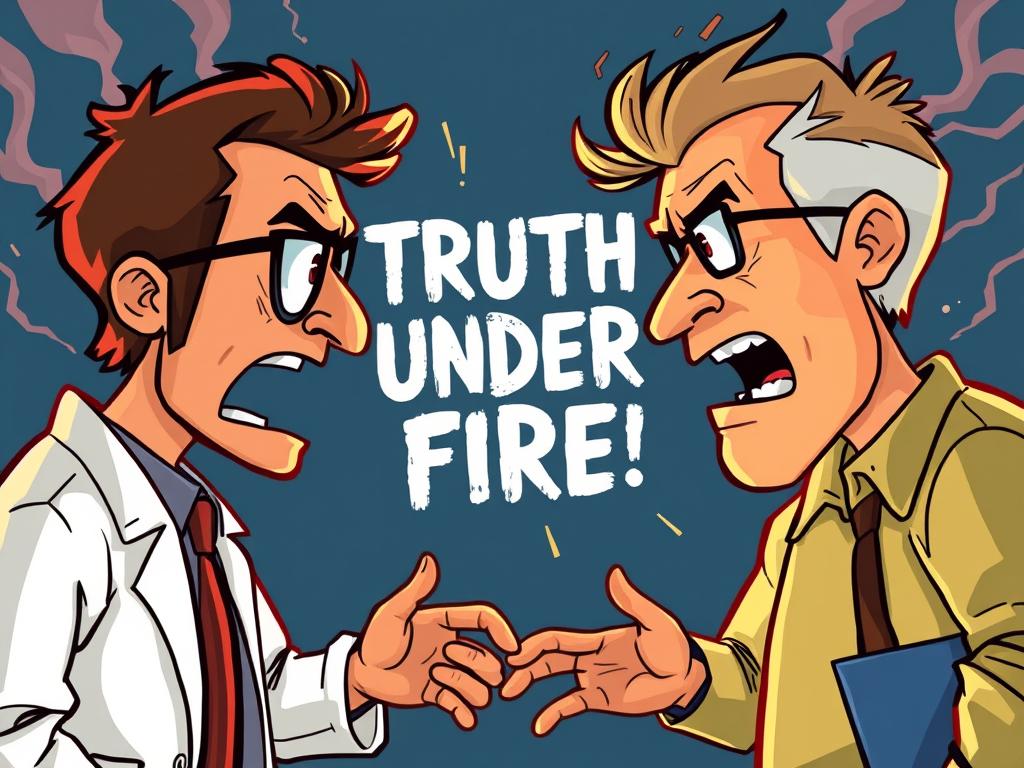
While generative AI has been used to create the accompanying graphic, I do not use AI tools in composing the content.



 Golden's Rules for Associations