The social media dog that didn’t bark

In the Sherlock Holmes mystery “Silver Blaze,” the solution turns on “the curious incident of the dog in the night-time.”  Scotland Yard Detective Gregory can be forgiven for his confusion when he protests, “the dog did nothing in the night-time.” “That,” Holmes observes, “was the curious incident.”

There are a number of dogs that didn’t bark in Jamie Notter and Maddie Grant’s 2012 Social Leadership Survey.  As Joe Rominiecki points out in ASAE’s coverage of the survey, the most deafening silence came in how low “participates on social media in his/her own voice” ranked in the survey’s list of desirable traits in a leader.  For all our talk about the importance of engagement in social media, that characteristic ranked tenth out of twelve in the survey.  And it came in behind such old school, low-tech characteristics as “brilliant strategist,” “holds others accountable,” and “leverages best practices.”

But before that segment within the association community that insists social media is just the latest fad diverting our time and attention from our real work gets too comfortable, the lesson to be learned is more subtle, but just as challenging to the status quo.

Reading the data, I would consider acceptance, or more precisely, overt recognition of the need for fluency and authenticity in the leader’s social media voice to be a lagging indicator.  It comes later.  But it will come.

Why do I say that?  Look at the leadership characteristics that did rank high in Notter and Grant’s survey: “transparent, shares information freely;” “comfortable with conflict;”  “open to diverse perspectives.” These are certainly capacities that are demanded of a social media-fluent association leader.  But they are also leading indicators: factors that are driving associations to social media, regardless of their level of comfort, fluency or expertise in that environment.

Now I can already hear the Twitter-resistant among you protesting that these same leadership characteristics have relevance and importance in the “real” world, too.  True enough.

But there is no question that social is the increasingly dominant medium for the general population.  And I, for one, find the fact that we recognize the importance of being strong in the very areas that will make us successful in both cyber and more traditional communications venues a very encouraging sign.  It is a basic requisite for survival in a multi-media environment that is changing rapidly around us —a world where we can ill afford any all-or-nothing media strategies and have to (at least for a while) keep our feet in multiple camps simultaneously or risk disenfranchising some portion of our constituency that is moving at a different speed toward social, or has different communications preferences.

I sometimes get irritated with some of the prophets of social media.  They can be just a little too insistent that “social media is the answer,” regardless of the question1.  Social is a means to an end, not a goal to be pursued for its own sake. If the data had merely indicated popular enthusiasm for social media as social media, I would have been unimpressed.  That would have just recognized an already obvious trend that might even be open to the charge of being a fad.

But the data didn’t do that.  It provided validation that the underlying skills necessary in effective social media are increasingly recognized as means every association leader needs to master, regardless of how far they have gone down the social media path.

That suggests we’re moving the right direction, whether we realize it or not.


1  And let me be crystal clear, I do not consider Notter and Grant to be included among those faux prophets of social media.  To the contrary. They are among the most clear-headed analysts of social media and associations out there today.  And if you haven’t read their book, Humanize, stop reading this blog and get it.

The myth about ‘special interests’

Much of the public thinks of associations as “special interests” who do nothing but lobby the system to game advantage (even though U. S. government data shows that associations spend many times more on educational activities than on lobbying).

In my opinion, “special interest” is a pejorative only when applied to a group whose interests we don’t share. No. If we were to be honest with ourselves, we are, each of us, members of dozens of special interests, based on our jobs, the communities we live in, the needs of our families, our beliefs and our passions.

And when individuals with a shared interest come together to advance their own cause in a way that also serves society, it is a thing of beauty.  It is perhaps ironic that a quintessentially Washington evening in celebration of “special interests” did such a powerful job reminding us of that fact.

Read my latest commentary in AssociationTRENDS to learn why I think it so important for events like ASAE’s 13th annual Summit Awards Dinner last week to showcase how much good associations do.

The myth about ‘special interests’

Looking into the congressional crystal ball

Associations have garnered their share of attention from the Hill in the last year, but no one expected a thoroughly gridlocked Congress to actually get anything done about it … at least until after the election.  And after that?   Read my latest commentary in AssociationTRENDS to learn why I don’t think any of the association issues already in play will be the headline legislative issues for associations in the year ahead.

Looking into the congressional crystal ball

What the world needs is more association executives

Closing the ASAE annual meeting in Dallas, author Dan Pink argued that, regardless of profession, we are all in sales. But the characteristics, skills and traits he described as essential for success sounded to my ears like precisely the attributes that distinguish effective association leaders, and differentiate us as a profession.

Read more in my latest commentary in Association Trends: What the world needs is more association executives | Association TRENDS

GSA, optics, over reactions and glass houses

I didn’t exactly go through the five stages of grief when the public furor over the GSA Las Vegas retreat first erupted in the media. But I did go through something like that process.

Stage one is denial: I am a “benefit of the doubt” kind of guy. If there is an innocent interpretation, I will go there first, rather than buy in to the most damning explanation.

I don’t know all the details, and I am sure at least some of the outrage was justified. But I am equally sure some of it was unfair. A friend of mine in the association field, who ought to know better, was offended that “tax dollars went to putting up GSA staff in a luxury suite.” Now, I don’t know for sure, but it is a safe bet the GSA didn’t actually pay anything like the retail rate for that suite. It was certainly deeply discounted, if not actually comped as part of the total meeting package. And just possibly the group actually saved money by hosting social activities in that space rather than renting a separate venue.

Then came stage two, anger, as it became clear that even if things weren’t as utterly reprehensible as the press coverage and righteous indignation wanted to paint them, this was bad. In this sound bite and visual image driven world, the facts don’t matter. The GSA’s choices couldn’t be explained away, even if all the facts were on their side (and I seriously doubt that is the case). The whole thing just looked bad, and once you are forced to explain yourself, you’ve already lost the battle[1].

The congressional overreaction was equally predictable and anger inducing Over broad “solutions” (which no one on the Hill is willing to take credit for authoring and which were unanimously approved by legislators who didn’t even bother to read them) will create problems where none existed before and won’t fix the problem that stirred a thoroughly gridlocked Congress to actually take action in the first place.

Bargaining is stage three. The formal legislative response being spearheaded by ASAE is appropriate, sound and absolutely vital to the association community. It deserves all of our support. We need to defend our meetings from being unfairly painted with the broad brush of scarlet that the mainstream media and Congress are applying to all meeting events. We need to roll back the asinine restrictions that will hamstring even the purest of pure, publicly beneficial educational, development, networking and information exchange events.

Stage four, depression, follows. The occasional bad actor’s black eye is a cross we all are going to have to bear. For a long time. And it is going to be hard to defend the defensible without sounding like we are making excuses for the indefensible.

Where I part with the classical Kübler-Ross model is stage five: acceptance. I am not prepared to do that.

But now that the initial furor has begun to die down, I feel safe offering a word of warning.

Don’t let your justifiable outrage over how unfair and misguided the press coverage and legislative response to “GSA-Gate” was lull you into a false sense of complacency or moral superiority. Let’s be honest: this wound was self-inflicted. Albeit, inflicted by one organization’s meeting, But nonetheless self-inflicted. And all of us who do meetings take a hit when one meeting’s atrocious optics capture headlines.

And as long as we’re being honest, let’s take a good hard look at our own meetings.

Sometimes what looks like a boondoggle is just that. A boondoggle.

We need to be absolutely above reproach in how we structure and promote our meetings. That means living up in full to the claims we make about them. Do they truly match the brochure’s promise to deliver real value, regardless of who is footing the bill? Do they actually serve our particular, parochial interests in a manner that also advances the public interest?

And how would they look if they showed up on YouTube?


[1] In my more than thirty-years in the profession I have never spent a dime of my association’s money for first class travel. But I travel enough that I occasionally score a free upgrade. Ever try to explain that when the chairman of the board trudges past you in first on his way to a middle seat in coach?

What’s in a word?

Association Trends data indicates a majority of associations do not include bonuses in staff compensation structures.  Perhaps part of the resistance is simply a matter of language.  “Bonus” sounds gratuitous and unearned.  But performance based compensation can be a critical element in achieving high staff performance.  Read more in my commentary in the July 19th Trends.

What’s in a word? | Association TRENDS

The extent (and limits) of a board’s authority

The rich “are different than you and me,” F. Scott Fitzgerald famously observed.  (“Yes, they have more money,” Ernest Hemingway is apocryphally reported to have cynically added.)

In the same vein, non-profit boards are different from corporate boards.  They have less latitude to lead.  Even when they have the clear legal authority and are acting entirely consistently with their duties and obligations, they sometimes lack the power to actually execute their decisions.

These thoughts have run through my mind these past days, as I followed the drama over the firing and re-hiring of University of Virginia President Teresa Sullivan. As an alum of the University, I care about what occurred, but I don’t pretend to have any inside knowledge or unique insight into the Board of Visitor’s actions. But observing the process I couldn’t help but recognize something that is a fact of everyday life for every association executive working with his or her volunteer board.

I don’t know, but it is very possible that the UVa Board of Visitors was objectively correct and perhaps even obligated by their duty to serve the best interests of The University to take the action they did in forcing Sullivan’s resignation.  Perhaps she was failing to perform her duties in a satisfactory fashion, or failing to act in a manner consistent with the direction set by the duly authorized board.  If that were the case, the board’s action was not only legally correct, but the only responsible one for them to take.  On the other hand, perhaps it was a political or personality thing, which would make the decision more questionable.

But it really doesn’t matter.  Where a for-profit corporation’s board can take an action and implement it with little need to explain or justify itself, a non-profit board faces thousands of stakeholders who feel they have a right to be fully informed if not directly involved in every decision “their” association/institution’s leaders take, and who are not slow to exert what they perceive to be their right of veto.

Like I said, I don’t know how valid or justified the UVa Board of Visitor’s initial action dismissing their “CEO” was.  But thirty-plus years in the association business has taught me that a board needs more than just the legal authority to take action … it needs to get buy-in from enough of its constituency to make the decision stick, and the UVa Board of Visitors clearly failed in this regard.

Having led trade associations, whose boards are made up of individuals accustomed to serving on corporate boards, this can be a particularly hard lesson for association board members to learn.  They sometimes fail to appreciate the difference in governance realities between their own company’s board and the association’s.  I can easily imagine the surprise and genuine confusion of members of the UVa board (from such companies as Morgan Stanley and Google) to the reaction of faculty and students.  “They don’t have all the information we do … why do they think they know better than those of us with all the facts and data in front of us?” Or more angrily, “What gives them the right to usurp the authority we were elected/appointed to exercise as a board?”

The lesson to be learned, is that in the not-for-profit world, position power, legal authority, even being right are insufficient.  Leaders and boards need credibility and stature and trust sufficient to bring those they lead along with them.  Or they face embarrassing failures.

Just ask UVa’s Board of Visitors.

The Generation Gap in Lobbying

There is a generation gap between lobbyists and the lobbied that requires rethinking established GR tactics.  Read my commentary from this week’s Association Trends.


Review Gate

Give the Metropolitan Opera credit. When its leadership screws up, they do it on a truly operatic scale.

The Met is a nonprofit, structured in a manner not unlike many associations. There is the parent organization, the opera company, that delivers the core value to its membership (audience).  And there is its educational foundation, the Metropolitan Opera Guild. The Guild engages in a number of activities in support of the parent, not the least of which is to publish the magazine with the widest circulation in the opera field, Opera News. A substantial part of each issue of the magazine is made up of reviews of opera productions from around the world.

On Monday, May 21st, in response to the sometimes negative reviews of the company’s own productions in the pages of the magazine, the Met announced that Opera News would stop reviewing the Met.  In an interview with the New York Times, Met general manager Peter Gelb indicated that he never liked the idea that an organization created to support the Met had a publication “passing judgment” on the institution with its negative critiques of the house’s productions.
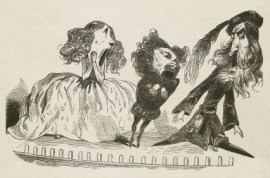
The reaction was immediate and predictable.  Some of the reaction was overwrought. Charges of censorship were made, which is hyperbole. The Met management, as the owner and publisher, has every right to decide what it will and will not publish in its own magazine. No one has a constitutional right to have what they want published in “their” association’s magazine.

But the censorship accusation also misses the point. The Met had every right to do what they did. It was just monumentally stupid. Stupid, stupid, stupid.

Forget whether you agree or disagree with the assessments of the artistic merits of the Met productions that appeared in the pages of Opera News: Does a gag order on any content independent of the management’s preferred narrative increase or decrease the credibility of the journal?

Does making the house organ nothing more than an outlet for sales hype and self-promotion make it more or less likely that the journal will actually be read?

And the irony of the Met’s action was that it was a huge overreaction, too. The criticism of Met productions in the pages of Opera News was far milder than the criticism carried elsewhere.

Transparency isn’t (or at least shouldn’t be) an imposed obligation.  It is the organization’s best defense against mischaracterizations of its actions and intentions. Transparency does expose you to criticism. But it also creates an environment where the facts are allowed to speak for themselves and there is an opportunity for open discussion.  Both your supporters and your detractors can weigh in and the lurkers following but not participating in the debate can decide for themselves. There is no guarantee that judgment will be reasonable or fair, but it maximizes the potential that the verdict will be informed.

Some in the opera world have serious doubts about Gelb’s capabilities as an operatic producer, but he is an undisputed master of marketing and PR. Which makes this monumental act of hubris all the more surprising. How could he miss the atrocious optics created by the action?  Could there be a clearer way to send the message that the organization feels it knows better than its audience (membership) what is good for them?  And that it doesn’t care what its audience (membership) wants from an organization that exists to serve its needs and is dependent upon its support for that very existence?

To the Met’s credit, its response to this gaffe was equally swift and bold. Within less than 24 hours, the Met voided its ill-considered move. (Wouldn’t you love to have been a fly on the wall for that board meeting?) And they did so in a clear and unequivocal manner.

http://www.metoperafamily.org/metopera/news/press/detail.aspx?id=22660

No attempt to rationalize or justify or downplay the mistake. They just fixed it.

Every association has to struggle with the balance between credibility and leveraging the advocacy potential of the communications outlets it controls (its journals, publications and website).

Every association would do well to go to school on the case study provided by the Met.

Everybody lies

The series had its ups and downs and wild swings in quality, but there is no question that Fox Television’s “House M.D.,” which came to an end after eight seasons this week, was consistently ambitious and compelling TV.  Held together at its center by the bravura performance of Hugh Laurie in the title role, the irascible, sometimes despicable, but clearly brilliant diagnostician, Dr. Gregory House, the series still managed to sustain an ensemble nature that is rare in dramatic series these days.

House’s catch phrase, “everybody lies,” was so memorable because it was so true.  The lies were (usually) not malicious, perhaps even unrecognized as lies by the patients and family members who uttered them.  But successfully diagnosing the bizarre and hidden ailment always rested on going past what the patient claimed and uncovering the actual facts behind the case — a task House and his team pursued with an astonishing disregard for privacy or simple human decency.

Now I am not suggesting associations should adopt a similarly sociopathic approach to analyzing members’ expressed needs and desires.  But a healthy skepticism that insists on validating what the members say they want with some objective and independent data before committing to a course of action can help the organization avoid sometimes costly strategic, marketing or policy mistakes.

My members (who create the official record of court and deposition proceedings) are engaged daily in capturing eyewitness testimony, most of it delivered with intense sincerity and conviction.  But any judge, lawyer or law enforcement officer will tell you that eyewitness testimony is notoriously unreliable.  Everybody lies, House would say.  And the fact that the witness is convinced to their very core that they saw exactly what they say they saw doesn’t change the fact that the reality is often very different. You need to look harder and go further.

Who among us hasn’t been there?  Whenever asked, members at my association consistently say that the kind of programming they would most like to see more of are sessions on ethics.  Yet when offered, those sessions are equally consistent in being the most under-attended.

Ronald Reagan’s famous dictum “trust, but verify,” is a perhaps a kinder and gentler statement of the same principle.  It doesn’t mean we shouldn’t listen to members or that we should stop asking for their input.  But in our market research and strategic analysis, we would all do well to look further and to demand some additional,  reliable and verifiable data before building our grand plans.